COMMODITY PRICES
Current copper price: Price, development & forecast for 2026
29.03.2026
Copper will remain one of the most strategically sensitive metals for Procurement in 2026. Three questions are currently crucial for procurement teams in Germany, Austria, and Switzerland: Where does the LME price stand? What does the build-up of inventories mean? And how strongly will tariffs and supply risks continue to affect the market? Updated every two weeks.
price history
The LME price is the global benchmark. For actual purchase prices, forming, semi-finished product logic, supplier surcharges, logistics, and, if applicable, currency must be added.
AT A GLANCE
- Kupfer bleibt teuer, hat sich seit dem letzten Update aber nur moderat bewegt. LME Copper Cash lag am 26. März 2026 bei 12.108,00 US$/t und damit weiterhin klar unter den Februar- und frühen März-Hochs, aber deutlich über Vorjahr. Gleichzeitig stiegen die LME-Bestände auf 359.825 t und damit auf den höchsten offen sichtbaren Stand seit Monaten.
- Ausblick: Hohes Niveau hält, aber der akute Knappheitsdruck lässt nach. Die seit August 2025 geltenden US-Zölle von 50 % auf Kupfer-Halbzeuge und intensive Kupferderivate, der anhaltende Anreiz zum US-Stockpiling und die strukturell angespannte Konzentratversorgung halten einen Preisboden unter dem Markt. Gleichzeitig hat sich der Lageraufbau der letzten Wochen fortgesetzt, was pauschale Knappheitsargumente in Preisgesprächen schwächt. Das wahrscheinlichste Bild bleibt ein seitwärts bis leicht schwächerer Markt auf weiterhin hohem Niveau.
- Besonders exponiert bleiben Warengruppen mit hohem Kupferanteil. Vor allem Kabel, Busbars, Transformatoren, Wickelgüter, Motoren, Inverter, Leistungselektronik und Ladeinfrastruktur. Dort ist der Kupferanteil hoch genug, dass selbst moderatere Marktbewegungen schnell in Stückpreise oder Nachverhandlungen hineinlaufen.
Contents
What is driving the price right now?
Bei Kupfer ist die Lage seit dem letzten Update weitgehend stabil geblieben. Der akute Preisdruck hat sich nicht verschärft, und der Lageraufbau setzt sich fort. Der Hauptgrund für dieses Update ist nicht die Preisbewegung, sondern eine faktische Korrektur: Die US-Zölle auf Kupfer-Halbzeuge sind seit August 2025 in Kraft, nicht mehr nur in der Untersuchungsphase. Für den Einkauf ändert das die Bewertung erheblich.
Die US-Zölle auf Halbzeuge sind geltendes Recht — bei Raffinade steht die Entscheidung noch aus
Am 1. August 2025 hat die US-Regierung per Section 232 einen Zoll von 50 % auf Kupfer-Halbzeuge und intensive Kupferderivate verhängt. Betroffen sind Kupferrohre, Draht, Stangen, Bleche, Kabel und Verbinder. Ausgenommen bleiben Kupfererze, Konzentrate, Kathoden, Anoden und Schrott. Davon zu unterscheiden ist die mögliche nächste Stufe: Gestaffelte Zölle auf raffiniertes Kupfer (im Gespräch sind 15 % und 30 %) sind nicht beschlossen, sondern Gegenstand eines Commerce-Updates, über das die US-Regierung voraussichtlich bis Ende Juni 2026 entscheiden will. Für den europäischen Einkauf ist das über zwei Kanäle relevant: erstens über die Umlenkung globaler Handelsströme durch die bereits geltenden Halbzeugzölle, zweitens über den fortlaufenden Anreiz zum US-Stockpiling, der den Weltmarktpreis auf erhöhtem Niveau hält.
Der Lageraufbau setzt sich fort, aber der Markt bleibt teuer
Die LME-Bestände sind seit dem letzten Update auf rund 359.825 t gestiegen. Gegenüber Anfang Februar mit 174.675 t ist das fast eine Verdopplung. Für Preisgespräche ist das ein immer stärkeres Argument: Pauschale Verweise auf akute Knappheit sind heute weniger belastbar als noch vor sechs Wochen. Gleichzeitig reicht der Lageraufbau nicht aus, um Kupfer wieder billig zu machen. Dafür bleibt das Marktumfeld zu stark von US-Zöllen und strukturell knapper Konzentratversorgung geprägt.
The supply side remains structurally tight
Auf der Konzentratseite hat sich nichts entspannt. Der jährliche TC/RC-Benchmark für 2026 wurde bei 0 US$/t vereinbart, Spotwerte sind seit 2024 negativ. Vor allem in China sind die Schmelzkapazitäten deutlich schneller gewachsen als das verfügbare Konzentratangebot. Für den Einkauf heißt das: Selbst wenn sichtbare Lager vorübergehend steigen, bleibt Kupfer im Hintergrund ein Markt mit enger Angebotsbasis.
Aurubis bestätigt stabile Nachfrage in Europa
Aurubis hat den Jahresausblick für 2025/26 angehoben und spricht von stabilen Produktmärkten und sehr guter Gesamtnachfrage nach Kupferprodukten, insbesondere bei Wire Rod für Energie, Infrastruktur und Kommunikationsanwendungen. Die Inbetriebnahme des Complex Recycling Hamburg (CRH) im ersten Halbjahr 2026 und die Erweiterung der Tankhouse-Kapazität in Bulgarien um 50 % zeigen, dass europäische Produzenten mit anhaltend hoher Nachfrage rechnen.
Where the movement is first becoming apparent
Draht, Kabel und kupfernahe Halbzeuge: Hier ist die Bewegung für den industriellen Einkauf am direktesten. Aurubis verzeichnet besonders starke Nachfrage bei Wire Rod für Energie, Infrastruktur und Kommunikationsanwendungen.
Busbars, Transformatoren und Anwendungen rund um Elektrifizierung: Die zweite Stufe zeigt sich in Warengruppen, die direkt an Netzausbau, Elektrifizierung und Rechenzentren hängen.
Kurzfristige Nachbeschaffung und Verträge mit kurzer Reset-Logik: Wer kupferintensive Komponenten kurzfristig nachbeschaffen muss oder in Verträgen mit enger Index-Reset-Logik steckt, spürt die Marktbewegung früher als Einkäufer mit längerer Preisbindung.
What does this mean specifically for Procurement Germany, Austria, and Switzerland?
Preisbestandteile trennen.
Bei kupferhaltigen Komponenten sollten LME-Basis, Kupferzuschlag, Umformung, Fertigung, FX und Logistik weiterhin getrennt abgefragt werden. Gerade in einem teuren, aber nicht mehr akut knappen Markt lohnt sich diese Zerlegung jetzt besonders, weil Lieferanten nicht mehr so leicht pauschal mit Notstand argumentieren können.
Die US-Zollsituation in der Verhandlung korrekt einordnen.
Die 50-%-Zölle auf Kupfer-Halbzeuge und intensive Kupferderivate gelten seit August 2025. Die mögliche nächste Stufe bei raffiniertem Kupfer ist noch nicht beschlossen, aber als Risikofaktor im Markt präsent. Für europäische Einkäufer wirkt das nicht direkt, aber indirekt: Die Umlenkung der Handelsströme und das fortlaufende US-Stockpiling halten den Weltmarktpreis auf erhöhtem Niveau. Für Verhandlungen ist deshalb wichtig zu verstehen, ob ein Lieferant diesen Effekt als Kostentreiber anführt und ob er tatsächlich betroffen ist.
Warengruppen mit hohem Metallanteil priorisieren.
Besonders exponiert bleiben aktuell Kabel, Busbars, Transformatoren, Wickelgüter, Elektromotoren, Inverter und Ladeinfrastruktur. Dort ist der Kupferanteil hoch genug, dass selbst moderatere Marktbewegungen schnell in Stückpreise oder Nachverhandlungen hineinlaufen.
Nicht jede Knappheitsbegründung gleich akzeptieren.
Der Lageraufbau liefert in Preisgesprächen inzwischen ein stärkeres Gegenargument als im letzten Update. Plausibel bleibt ein hohes Preisniveau. Weniger plausibel sind pauschale Verweise auf „extreme Marktknappheit“ über die gesamte Wertschöpfung hinweg, wenn die sichtbaren Lager sich seit Anfang Februar fast verdoppelt haben.
What is currently plausible in negotiations and what you should examine separately
Plausibel bleibt bei Kupfer ein hohes Preisniveau auf Rohstoffseite. Die seit August 2025 geltenden US-Zölle von 50 % auf Halbzeuge und intensive Kupferderivate, der anhaltende Anreiz zum US-Stockpiling und die strukturell angespannte Konzentratseite mit extrem niedrigen TC/RCs stützen die Argumentation, dass Kupfer als Basis aktuell teuer bleibt.
Getrennt prüfen sollten Sie dagegen jede Begründung mit akuter Knappheit über die gesamte Wertschöpfung hinweg. Die LME-Bestände haben sich seit Anfang Februar fast verdoppelt. Das heißt nicht, dass Kupfer billig wird, wohl aber, dass pauschale Notstandsargumentation heute weniger belastbar ist. In Preisgesprächen sollten deshalb LME-Basis, Kupferzuschlag, Verarbeitung, Fertigung und FX-Effekt weiter separat ausgewiesen werden.
classification
Kupfer bleibt ein Thema aus hohem Preisniveau plus Unsicherheit, nicht aus akutem Notstand. Die US-Zollfrage ist bei Halbzeugen nicht mehr offen, sondern geltendes Recht — mit einer möglichen weiteren Verschärfung bei raffiniertem Kupfer als zusätzlichem Risikofaktor. Für den Einkauf verschiebt das den Hebel weiter: weniger Reaktion auf Panik, mehr Fokus auf Index, Zuschläge, Vertragslogik und Timing.
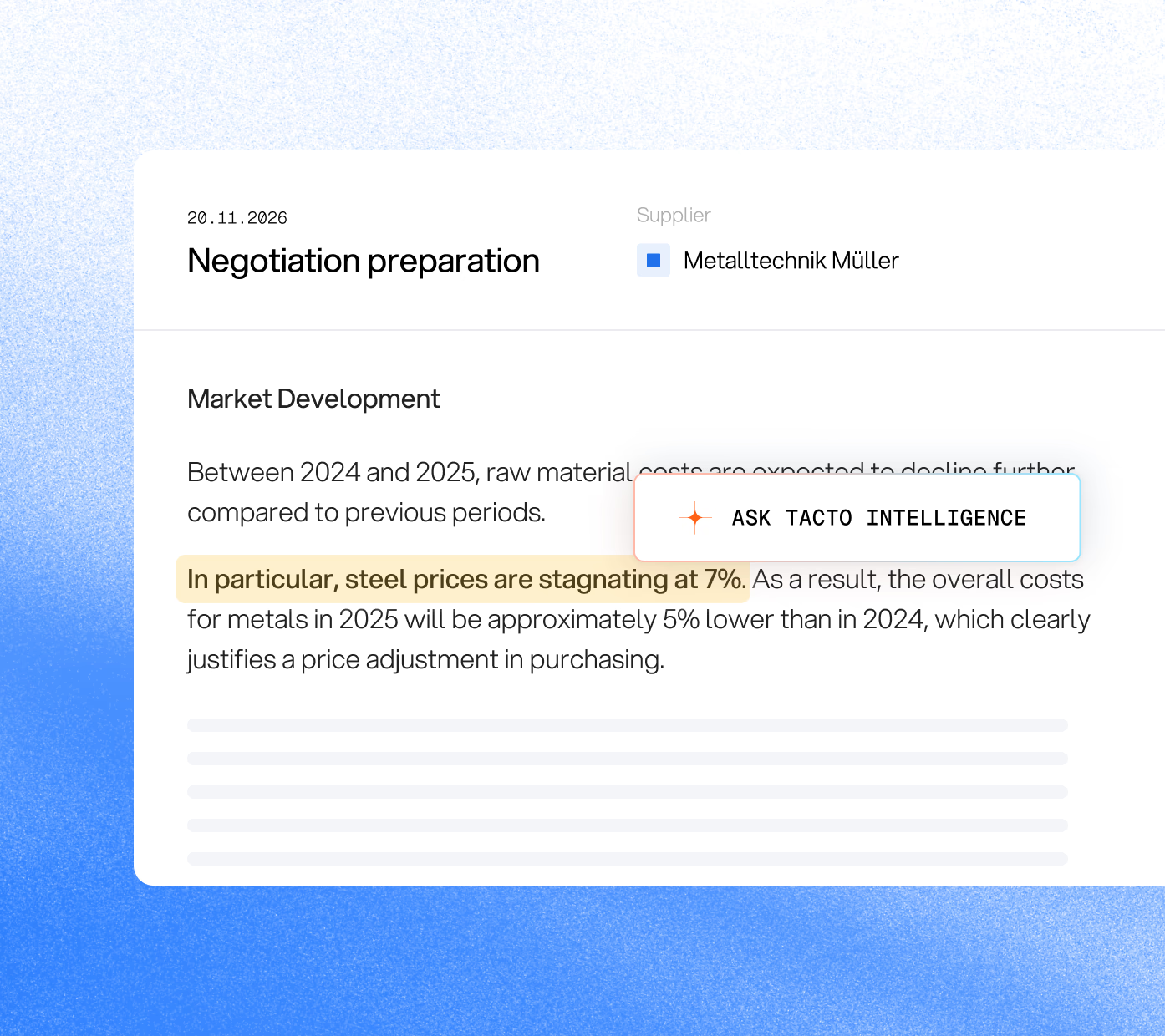
Tacto Intelligence links your ERP data to over 20,000 commodity and market indices, including steel, cold-rolled strip, galvanizing, energy, and freight. This allows you to see in real time which Categories your portfolio are affected by current market movements.
>20.000
Price indices integrated
75 %
less preparation work
>5.000
Price increases prevented with Defender Agent
Copper price forecast: Assessment by our Procurement Intelligence Team
base case scenario
In den nächsten 4 bis 6 Wochen rechnen wir weiter mit einem hohen, aber seitwärts bis leicht schwächeren Markt. Der Lageraufbau der letzten Wochen hat den akuten Knappheitsdruck reduziert, und der Rückgang vom Februar-/März-Hoch setzt sich fort. Gleichzeitig halten die seit August 2025 geltenden US-Zölle von 50 % auf Kupfer-Halbzeuge und intensive Kupferderivate, die strukturell angespannte Konzentratversorgung und der anhaltende Anreiz zum US-Stockpiling einen Preisboden unter dem Markt. Aus heutiger Sicht bleibt ein Niveau knapp unter oder um das aktuelle Level das wahrscheinlichste Bild.
risk scenario
Das Aufwärtsrisiko bleibt bestehen, falls sich Lager wieder abbauen, zusätzliche Minen- oder Schmelzerstörungen auftreten oder der anhaltende Anreiz zum US-Stockpiling wieder zunimmt. Zusätzlichen Druck könnte auch eine spätere Entscheidung der US-Regierung zugunsten weiterer gestaffelter Zölle auf raffiniertes Kupfer erzeugen. In diesem Fall könnte sich der Markt trotz der jüngsten Entspannung erneut deutlich in Richtung der Hochs von Anfang 2026 bewegen. Besonders betroffen wären dann weiterhin Warengruppen mit hohem Kupferanteil und kurzer Vertrags- oder Nachbeschaffungslogik.
Related commodity prices
Related topics in the purchasing glossary
Frequently asked questions
Whether they actually move in parallel with the commodities market or whether they rise independently of it. Especially when LME levels are high, it is worthwhile to make a clear distinction between metal value and processing, because otherwise a rise in commodity prices is monetized twice.
Then, when the raw material share is high and market movements are quickly reflected in the calculation. In the current environment, clear index clauses with defined reset logic are often more resilient than fixed prices, in which suppliers price in their uncertainty via hidden risk premiums.
Rising inventories are a sign of relief, but not yet a trend reversal. As long as tariff uncertainty, trade shifts, and supply risks support the market, copper may remain expensive, even though the inventory situation is improving.
