COMMODITY PRICES
Current steel prices: Price, development & forecast for 2026
23.03.2026
What does the current steel price mean for your Procurement? We classify the market with hot-rolled coil (HRC) in Northern Europe as a leading indicator and supplement it with follow-up products relevant to industrial procurement. Updated every two weeks.
The current price movement is not limited to hot-rolled strip. Cold-rolled strip and galvanized flat steel are also rising in price. This points to a broader upward trend in the European flat steel market.
AT A GLANCE
- Preisanstieg über den Flachstahlkorb bleibt intakt: HRC in Nordeuropa hat sich seit dem letzten Index von 701,46 €/t (10. März) weiter befestigt und wird aktuell bei rund 720 €/t delivered gehandelt. Kaltband liegt weiter bei 785 bis 790 €/t, verzinkter Flachstahl bei 795 bis 800 €/t. Der Preisdruck bleibt damit nicht auf Warmband begrenzt, sondern wirkt über den gesamten Flachstahlkorb.
- Ausblick: Unser Procurement Intelligence Team rechnet in den nächsten Wochen eher mit gleichbleibenden bis leicht höheren Preisen. Dahinter stehen drei Faktoren: Die Importarbitrage bleibt unter CBAM und mit Blick auf das neue Schutzinstrument ab Juli 2026 geschwächt, europäische Werke halten die Angebotsdisziplin hoch, und höhere Energie- und Frachtkosten stützen die Kostenbasis der Produzenten. Gleichzeitig bleibt der Weltmarkt strukturell überversorgt, was den Spielraum nach oben begrenzt.
- Besonders exponiert: Kaltgewalzte und beschichtete Flachstahlprodukte. Warengruppen mit hohem Kaltband- oder Verzinkungsanteil, darunter Gehäusetechnik, Schaltanlagenbau, Kabeltrassen, Lüftungskomponenten und beschichtete Außenbauteile, spüren die Preisdynamik am stärksten, weil Folgeproduktaufschläge zusätzlich zum Basispreis wirken. Marktteilnehmer berichten weiter von verkürzten Angebotslaufzeiten und ausverkauften Lieferfenstern bei CRC und HDG.
Contents
What is driving the price right now?
Der aktuelle Preisanstieg ist kein Einzelereignis, sondern das Ergebnis mehrerer parallel wirkender Faktoren. Neu gegenüber dem letzten Update ist vor allem, dass sich das Preisziel der Werke inzwischen stärker im Markt verankert hat. Gleichzeitig ist die Endnachfrage zwar stabiler, aber weiterhin nicht stark genug, um allein einen breiten Preisschub zu erklären. Das aktuelle Marktbild ist deshalb vor allem eines aus schwächerer Importalternative, höheren Kosten, Werksdisziplin und antizipierenden Käufen.
Importe sind für viele Käufer weiter schwerer kalkulierbar
Seit 1. Januar 2026 gilt CBAM im definitiven Regime. Für Stahlimporte in die EU reicht es deshalb noch weniger als früher, nur den Basispreis zu vergleichen. CO₂-Kosten, Dokumentation, Lieferzeit und Risiko zählen stärker mit. Parallel hat der Rat bereits sein Mandat für das neue Schutzinstrument verabschiedet, das die bisherigen Safeguards nach dem 30. Juni 2026 ablösen soll. Der Markt preist diese neue Importrealität längst mit ein.
Das zeigt sich auch praktisch im Markt. In der letzten öffentlich nachvollziehbaren CRC-/HDG-Bewertung berichten Käufer, dass neue Importangebote knapp sind und für Sommerlieferungen schwer kalkulierbar bleiben. Ein italienischer Käufer formuliert es direkt: Ohne Klarheit über die länderspezifischen Quoten sei es zu riskant, Importe für Juli zu buchen. Für europäische Beschaffer heißt das: Das Gegenangebot aus dem Import verliert weiter an Schärfe, genau in einer Phase, in der europäische Werke ihre Preisforderungen hoch halten.
Die Industrie in Deutschland bleibt stabilisiert
Der HCOB Germany Manufacturing PMI lag im Februar bei 50,9 nach 49,1 im Januar. Damit ist die Industrie in Deutschland erstmals seit mehr als dreieinhalb Jahren wieder knapp in den Expansionsbereich zurückgekehrt. Das ist kein Boom-Signal, aber es reicht, damit Werke Preisforderungen leichter durchsetzen können als noch vor wenigen Monaten. Gerade bei Flachstahl wirkt schon eine kleine Nachfragestabilisierung schnell auf Preisgespräche durch.
Wichtig ist dabei die richtige Einordnung: Der Markt zieht aktuell nicht an, weil die Endnachfrage plötzlich stark wäre. Vielmehr berichten Marktteilnehmer, dass Service Center und Lagerhalter wieder Material sichern, weil sie weitere Preissteigerungen erwarten, obwohl sich der reale Verbrauch nicht im gleichen Maß verbessert hat. Für Sie in der Verhandlung ist genau das relevant: Der Markt ist fester, aber nicht, weil alle Endmärkte überlaufen.
Energie- und Frachtrisiken stützen die Kostenbasis
Höhere Öl- und Gaskosten sowie unsichere Handelsrouten belasten die Kostenbasis der europäischen Stahlproduktion. CRU beschreibt den wichtigsten Effekt des Iran-Konflikts für die Stahl-Wertschöpfungskette ausdrücklich über steigende Energie- und Frachtkosten, nicht primär über eine physische Stahlknappheit. Das ist besonders für Europa relevant, weil sich höhere Gas- und Transportkosten direkt auf die Break-even-Schwelle der Werke auswirken.
Die Marktreaktion war Anfang März bereits konkret sichtbar. In der Fastmarkets-/EUROMETAL-Berichterstattung lagen die europäischen Gaspreise bei über 50 €/MWh, nach 30 bis 34 €/MWh im Februar. Gleichzeitig wurden Lieferungen aus Asien nach Europa teils über das Kap der Guten Hoffnung umgeleitet, was die Transitzeiten um rund zwei Wochen verlängerte. Für Einkäufer ist das besonders bei Kaltband und verzinktem Material relevant, weil dort knappe kurzfristige Verfügbarkeit und höhere Energiekosten am stärksten zusammenwirken.
Werksdisziplin und kurze Angebotslaufzeiten halten den Markt fest
Neu seit dem letzten Update ist vor allem, dass sich das Preisziel der marktführenden Werke stärker verankert hat. Laut Kallanish liegt das derzeit akzeptierte Zielniveau für HRC in Nordwesteuropa bei 720 €/t delivered, und integrierte Werke seien kaum noch unter 700 €/t ex works zu bekommen. Das ist ein wichtiges Signal: Der Markt diskutiert nicht mehr nur über steigende Ziele, sondern zunehmend über akzeptierte Niveaus.
Hinzu kommen weiter kurze Angebotslaufzeiten. Bereits Anfang März waren mehrere Anbieter bei CRC und HDG für Mai ausverkauft; im Benelux-Markt wurde sogar von ausverkauften Juni-Mengen bei HDG berichtet. Für den Einkauf heißt das: Wer kurzfristig nachbeschaffen muss, ist heute in einer deutlich schwächeren Verhandlungsposition als Käufer mit laufenden Rahmen oder abgesicherten Volumina.
The global market remains the counterbalance
Trotz der aktuellen Aufwärtsfaktoren bleibt der Weltmarkt überversorgt. Die OECD erwartet, dass die globale Stahlüberkapazität bis 2027 auf 721 Mio. Tonnen steigt. Auch der Rat verweist in seinem Mandat für das neue EU-Schutzinstrument auf genau diesen Überhang als strukturelles Problem. Das begrenzt, wie weit europäische Preise über das aktuelle Niveau hinauslaufen können. Für Sie im Einkauf heißt das: Nach oben ist Luft, aber nicht grenzenlos.
Where the movement is first becoming apparent
Cold-rolled strip and galvanized flat steel
Hier steigen die Preise aktuell schneller als im breiten Stahlkorb. Die letzte öffentlich nachvollziehbare Bewertung liegt bei 785 bis 790 €/t für CRC und 795 bis 800 €/t für HDG. Gleichzeitig berichten Marktteilnehmer von knappen Lieferfenstern und ausverkauften Liefermonaten. Genau hier ist die aktuelle Marktanspannung am sichtbarsten.
Categories a high proportion of sheet metal
Besonders betroffen sind aktuell Gehäusetechnik, Schaltanlagenbau, Kabeltrassen, Lüftungstechnik und beschichtete Außenbauteile. Dort steigen nicht nur die Coil-Basispreise, sondern häufig zusätzlich die Aufschläge für Kaltband und Verzinkung.
Short-term requirements
Wer auf kurze Angebotslaufzeiten, Nachbestellungen oder geringe Lagerabdeckung angewiesen ist, spürt die Marktbewegung früher als Einkäufer mit stabilen Kontrakten. Im aktuellen Umfeld ist kurzfristige Verfügbarkeit selbst ein Preisfaktor.
What does this mean specifically for Procurement Germany, Austria, and Switzerland?
Break down price demands by component
Basispreis, Kaltband- oder Verzinkungsaufschlag, Energiezuschlag, Logistikzuschlag und Lieferzeitprämie sollten Sie weiterhin getrennt abfragen und einzeln bewerten. Pauschale Preiserhöhungen ohne Aufschlüsselung sollten konsequent hinterfragt werden. Im aktuellen Markt ist genau diese Trennung der größte Hebel, weil HRC, CRC und HDG nicht synchron auf alle Treiber reagieren.
Check Categories exposure
Die aktuelle Dynamik konzentriert sich weiter auf Flachstahlprodukte mit hohem Kaltband- oder Verzinkungsanteil. Einkaufsorganisationen mit starkem Anteil in Gehäusetechnik, Schaltanlagenbau, Kabeltrassen, Kabelinfrastruktur und Lüftungstechnik sind überproportional exponiert. Andere Stahlgruppen zeigen derzeit deutlich weniger Bewegung. Eine pauschale „Stahlbotschaft“ sollte deshalb immer warengruppenscharf aufgebrochen werden.
Monitor offer periods and renegotiation clauses more closely
Bei Kaltband und HDG berichten Marktteilnehmer weiter von verkürzten Bindungsfristen und knapperen Lieferfenstern. Wer Angebote länger offen hält oder auf kurzfristige Nachbestellungen angewiesen ist, riskiert Nachverhandlungen oder deutlich schlechtere Verfügbarkeiten.
Importalternativen realistischer bewerten
Der klassische Einkaufshebel „Dann weichen wir auf Importe aus“ zieht seit 2026 weniger stark. Wer Import als Druckmittel einsetzt, muss heute CBAM, Quoten, Dokumentationsaufwand, Transitzeit und Frachtrisiko mitdenken. Das nominell günstigere Drittlandsangebot ist dadurch immer seltener automatisch das wirtschaftlich bessere Gesamtpaket.
What is currently plausible in negotiations and what you should examine separately
Plausibel sind derzeit höhere Basispreise für HRC sowie zusätzlicher Aufwärtsdruck bei Kaltband und verzinktem Material. Ebenfalls plausibel sind Lieferantenargumente, die sich auf erschwerte Importarbitrage unter CBAM, erhöhte Prozessenergiekosten und knappe kurzfristige Verfügbarkeit stützen. Auch kurze Angebotslaufzeiten bei CRC und HDG sind aktuell ein reales Marktsignal und kein bloßes Druckmittel.
Getrennt prüfen sollten Sie dagegen pauschale Erhöhungsanfragen auf Bauteile und Komponenten, die keine klare Warengruppen-Aufschlüsselung enthalten. Ebenso kritisch sind Begründungen, die sich auf eine außergewöhnlich starke Endnachfrage stützen. Die aktuellen Marktberichte zeigen eher einen antizipierenden Markt mit Vorzieheffekten als einen breiten Endmarktboom. Genau hier liegt Ihr Verhandlungsspielraum.
classification
Eine schnelle Entspannung ist derzeit nicht das wahrscheinlichste Szenario. Gleichzeitig bieten globale Überkapazität, verhaltener Realverbrauch und die weiterhin hohe Lagerverfügbarkeit downstream reale Gegenargumente gegen überzogene Forderungen. Für disziplinierte Einkäufer bleibt der Markt anspruchsvoll, aber keineswegs frei von Verhandlungsspielraum.
Tacto Intelligence links your ERP data to over 20,000 commodity and market indices, including steel, cold-rolled strip, galvanizing, energy, and freight. This allows you to see in real time which Categories your portfolio are affected by current market movements.
>20.000
Price indices integrated
75 %
less preparation work
>5.000
Price increases prevented with Defender Agent
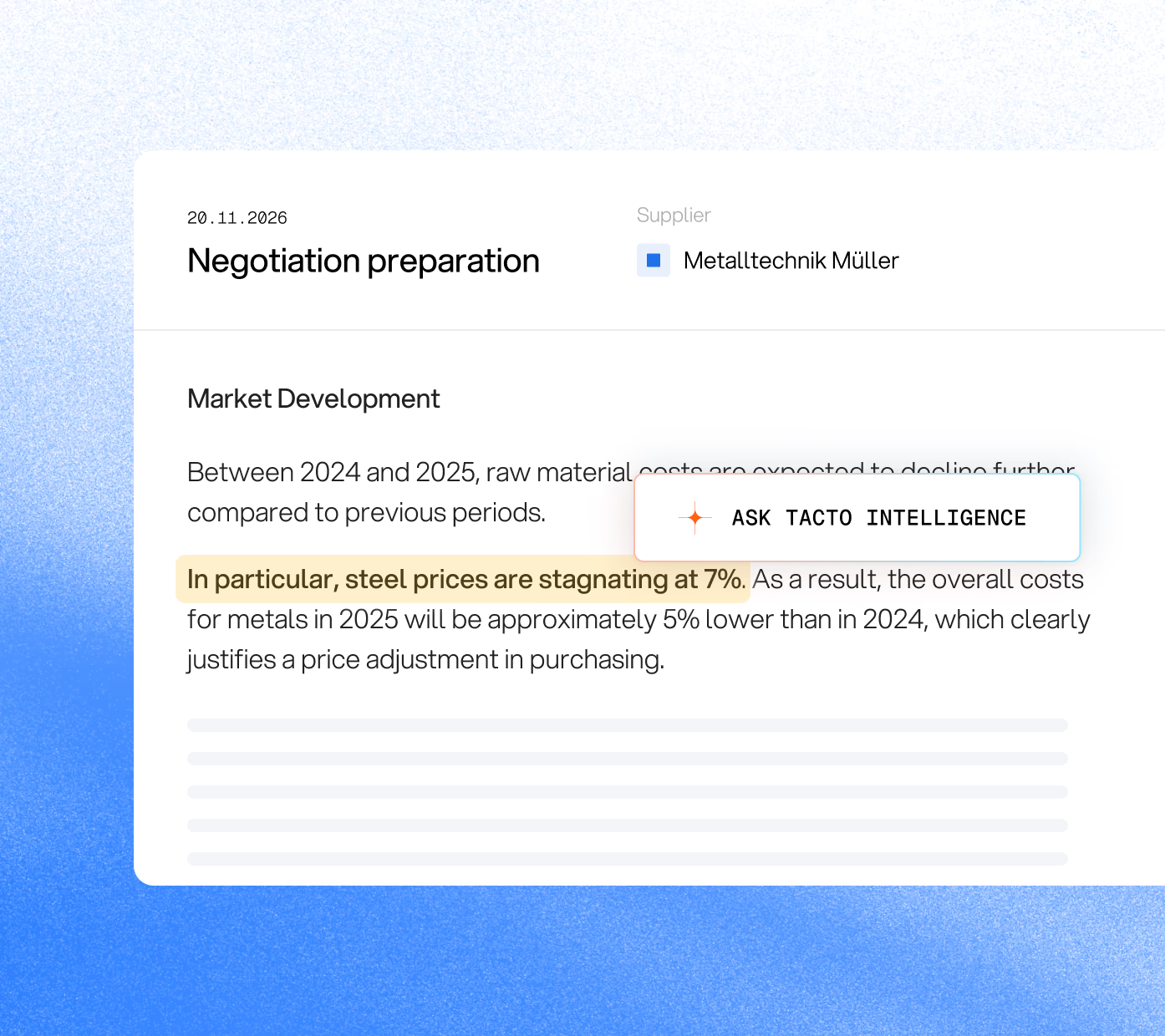
Steel price forecast: Assessment by our Procurement Intelligence Team
base case scenario
In den nächsten 4 bis 6 Wochen rechnen wir mit einem stabilen bis leicht steigenden Markt. CBAM hält die Importarbitrage unter Druck, europäische Werke halten die Angebotsdisziplin hoch, und erhöhte Energie- sowie Frachtkosten stützen die Kostenbasis. Gleichzeitig verhindert die globale Überkapazität einen unkontrollierten Anstieg. Das wahrscheinlichste Bild bleibt deshalb ein weiter fester Markt knapp oberhalb des heutigen Preisankers.
risk scenario
Das relevante Risiko liegt auf der Oberseite. Auslöser wären eine weitere Eskalation der Energie- und Frachtkosten, zusätzliche Produktionsunterbrechungen oder ein stärkerer Vorzieheffekt im Einkauf, falls Marktteilnehmer weitere Erhöhungen antizipieren. Besonders betroffen wären in diesem Szenario Warengruppen mit hohem CRC- und HDG-Anteil, also genau die Segmente, die bereits heute die stärkste Anspannung zeigen.
Related commodity prices
Related topics in the purchasing glossary
Frequently asked questions
Seit Januar 2026 müssen Importeure für Stahl CBAM-Zertifikate erwerben, die den CO₂-Fußabdruck der Produktion abbilden. Die Kosten hängen vom Herkunftsland, der tatsächlichen Emissionsintensität und dem aktuellen EU-ETS-Preis ab. Für eine vollständige Importkalkulation reicht es nicht mehr, nur den Basispreis zu vergleichen. Sie müssen CBAM-Zertifikatskosten, Dokumentationsaufwand, Quotenverfügbarkeit unter dem neuen Schutzinstrument ab Juli 2026 und das Risiko längerer Transitzeiten einrechnen. In vielen Fällen ist das nominell günstigere Drittlandsangebot nach Gesamtkostenrechnung nicht mehr die wirtschaftlich bessere Alternative.
HRC (Warmband) ist das Basismaterial. Kaltband (CRC) erfordert einen zusätzlichen Walzschritt und liegt deshalb typischerweise 80 bis 130 €/t über HRC. Feuerverzinkter Flachstahl (HDG) kommt nochmals mit einem Beschichtungsaufschlag. Im aktuellen Markt steigen CRC- und HDG-Preise teils schneller als HRC, weil knappe Verfügbarkeit und höhere Energiekosten bei den Folgeprodukten stärker durchschlagen. Für die Verhandlung heißt das: Nicht jede Stahlpreiserhöhung trifft alle Produkte gleich, und eine Aufschlüsselung nach Basispreis, Produktaufschlag und Energiekomponente ist der wichtigste Hebel gegen pauschale Forderungen.
A thorough review begins with three questions: Is the relevant market indicator rising? Are the follow-up products you actually purchase keeping pace? And does the supplier's demand match current supply levels in the market? If even one of these three points is missing, it is worth fighting back.
Only if the comparison does not end at the base price. Since 2026, CO₂ costs, authorization, quota logic, delivery time, and risk have become more important factors in imports than before. For many procurement situations, the mathematically cheaper price is no longer automatically the better negotiating alternative.
HRC remains the most important leading indicator for European flat steel. However, the decisive factor in negotiations is how the gap between cold-rolled strip and galvanizing surcharges changes. This is precisely where it becomes apparent whether price demands are objectively justified or whether additional margins are being passed on.
